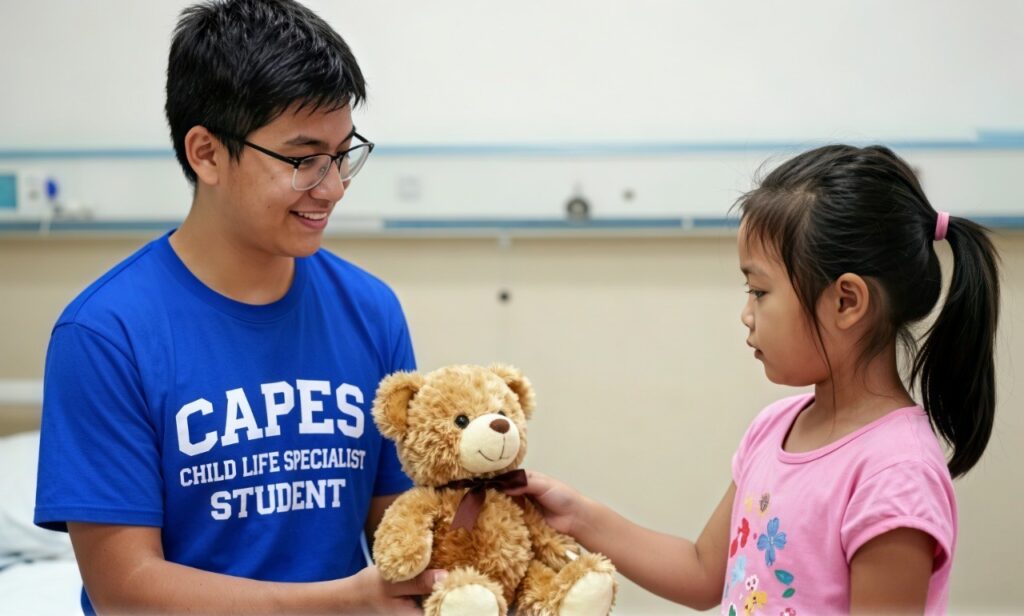
Why CAPES?
Why an International Child Life Specialist Practicum & Experiential Service-Learning?
International experiences help child life specialist students build cultural competency, and practice non-verbal communication across language barriers. These hands-on experiences help students stand out in the highly competitive internship selection process while preparing them to support diverse, global patient populations. An international child life practicum offers several targeted advantages for aspiring child life specialists:
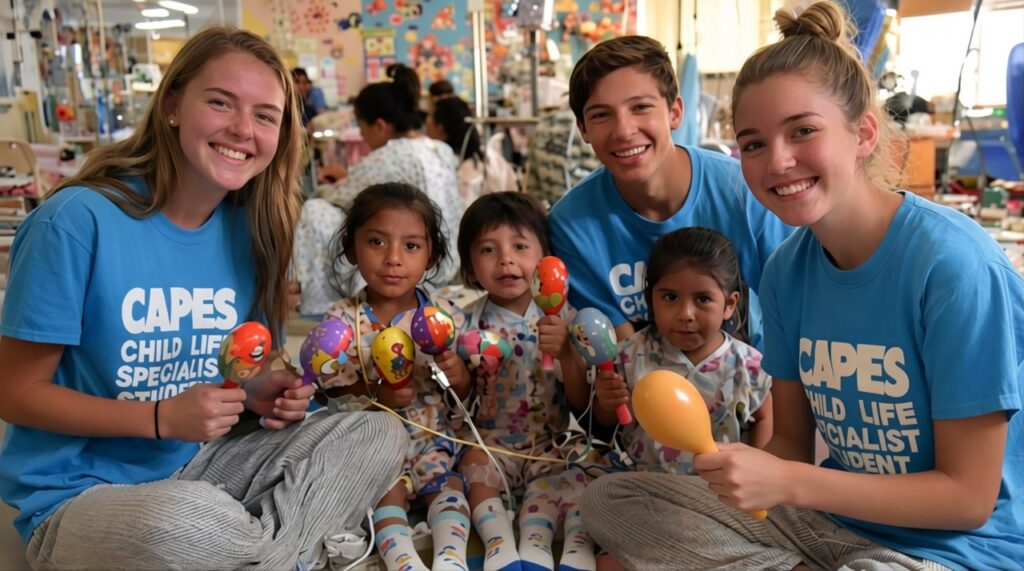
Enhancing Internship Competitiveness
Completing an international practicum is a unique credential that distinguishes your application in a notoriously competitive field.
Mastering Non-Verbal Communication
By navigating healthcare environments where you may not speak the local language natively, you learn to rely on nonverbal communication, therapeutic play, comfort positioning, etc.
Broadening Cultural Humility
Working with international patients, families, and healthcare teams teaches you to recognize your own biases and respect different cultural approaches to illness, grief, and healing.
Building Resilience
Experiencing healthcare systems in foreign countries teaches you to adapt quickly, be flexible, and handle unpredictable scenarios with confidence.
Comparative Healthcare Knowledge
You observe how different countries structure pediatric care, pain management, and family presence policies, helping you advocate for systemic improvements back home.
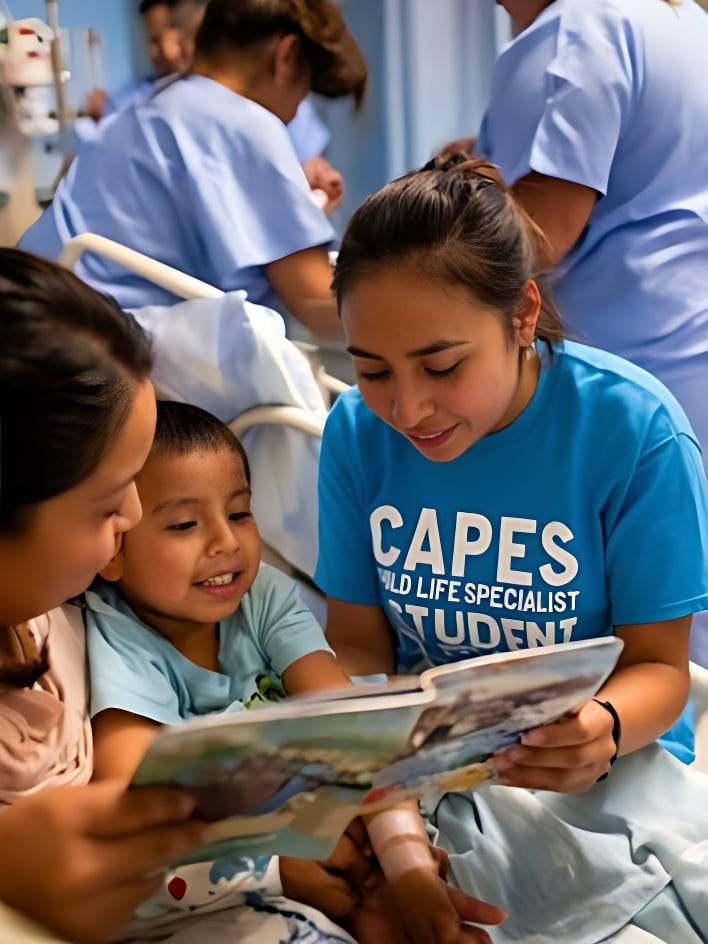

Global Network Expansion
You build relationships with international child life specialists, hospital play specialists, psychologists, and pediatricians, opening doors for global collaboration or research.
Resourcefulness and Adaptability
You learn to implement therapeutic play using limited, local, or non-traditional materials, which sparks creative clinical interventions.
Language Immersion
Spending time in a non-English speaking country accelerates your language skills, making you an invaluable asset to a hospital in your future career.
Deepened Empathy for Immigrant Families
Navigating a foreign country where you don’t know the system mimics the vulnerability that immigrant or non-English speaking families feel in hospitals.
Advanced Crisis Management
Managing the logistics of living and working in a new country strengthens your emotional regulation and coping skills, reducing your risk of future burnout.
Enhanced Interdisciplinary Collaboration
You practice explaining the value of child life and therapeutic play to medical professionals who may have never heard of the profession, sharpening your elevator pitch and advocacy skills.